
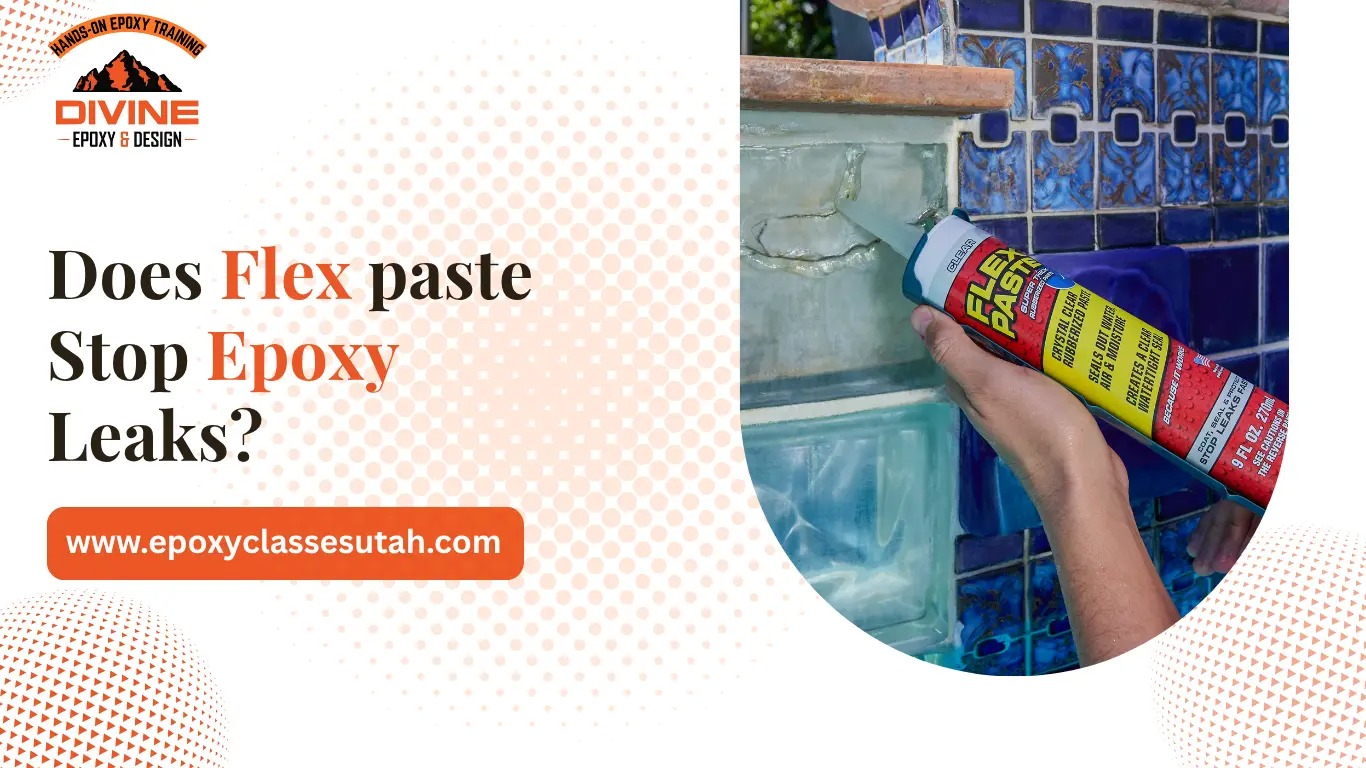
Epoxy systems find wide use in flooring, coatings, repair and industry due to their strength, chemical resistance and long life finish. Nevertheless, similar to any material system, epoxy cannot be fully resistant to issues. Leakage or failure of epoxy coatings is one of the most common problems that people encounter in their daily lives. When this occurs, the common question is: are products such as Flex Paste able to keep epoxy leaks at bay?
To answer this appropriately, it is essential to know what epoxy leaks are and how the sealing of products such as Flex Paste actually works in the real-world environment.
Understanding Epoxy Leaks
Epoxy leaks do not necessarily consist of simple cracks on the surface. They are in most cases, symptoms of underlying problems of application or structure. Epoxy is created to create a bonded, rigid, and strong surface. When it does not work, it normally does so because of one or a combination of the following reasons:
- Poor preparation of the surface before application.
- Wrong proportions of resin and hardener.
- Water confined in the substrate.
- Structural movement or cracking at the bottom of the epoxy layer.
- Unsuitable curing conditions, including temperature or humidity problems.
When such problems arise, cracks, pinholes, or delaminated to the surface may occur on the epoxy layer. These vents can admit water, chemicals or air, and create what is popularly known as an “epoxy leak.
One should realize that in most cases, epoxy leaks are not only superficial issues. In most instances, they are structural or application-based failures that cannot be fixed in a quick fashion.
What is Flex Paste?
Flex Paste is a thick, rubberized sealing compound that is used to seal the gaps, cracks and holes. It is commonly applied in waterproofing, minor repair, and sealing applications. Being applied, it creates a flexible layer that may withstand the water attacks and offer the temporary protection against the leakages.
It is distinguished primarily by the simplicity of use. It may be applied directly to surfaces without complicated equipment and it sticks to most materials. It finds application in home repairs, roofing cracks, plumbing, and other small sealing jobs.
Nevertheless, as a surface sealant, its effectiveness is highly dependent on the kind of problem that is being dealt with.
Can Flex Paste Stop Epoxy Leaks?
The long answer is it depends on how severe it is and how the leak that occurred.
In some cases, Flex Paste may be useful but is not a universal solution to epoxy system failures.
1. Small Shallow Surface Cracks or Pinholes
When the epoxy surface contains small cracks or pin holes where moisture is escaping then Flex Paste can be used to temporarily seal these holes. In these situations it serves as a protective coating that retards or inhibits instantaneous leakage. This may be handy as a temporary solution, particularly where the repair cannot be done immediately.
2. Temporary Emergency Fix
When a quick remedy is necessary, like preventing water ingress until a proper repair can be effected, then Flex Paste can be used as a temporary solution. It is capable of purchasing time before a complete epoxy repair or resurfacing is done.
3. Does not Work on Structural Failures
In case the epoxy has been damaged by even deeper causes such as bad bonding, water infiltration, or substrate movement, Flex Paste will not provide a solution. In this instance it is not only the surface where the leakage is occurring and where the leakage is taking place but the underlying system itself. Miscellaneous covering will not prevent the continued failure below.
With time, the pressure or movement below it may cause the Flex Paste to break or peel off, permitting the leak to resume.
Why Epoxy Leaks Need Proper Repair
Epoxy systems are designed materials. Choosing the best epoxy flooring material for your project can also help prevent many common causes of epoxy failure. When they do not work, it is most likely that some problem occurred during installation or something went beyond the limits of the system. Due to this, the root cause needs to be addressed to provide long-term repair.
The normal steps to repair an epoxy leak are normally the following:
- Elimination of damaged or loose pieces of epoxy
- Washing and pre-treating the substrate well
- Maintaining moisture levels is ensured
- Redoing epoxy with an appropriate mixing and curing environment
These steps are necessary so that any superficial solution will not be lasting.
Although helpful, Flex Paste does not take the place of this process. It is merely a surface coating and not a reestablishment of the structural integrity of the epoxy system.
When Should You Use Flex Paste?
The following are some best uses of Flex Paste:
- Minor cracks or holes in non-structural areas
- Sealing temporarily until professional repair has been performed
- Other small leaks that are not associated with substrate failure
- Quick fixes in household or light-duty applications
It should not be trusted in regard to:
- Epoxy flooring systems in the industry
- Load-bearing surfaces
- Large-scale coating failures
- Moisture-related epoxy breakdowns
This difference is vital to understand and prevent recurring problems.
Importance of Proper Epoxy Training
Most of the epoxy failures occur not due to the product mix itself but through the application methods. Epoxy systems demand accuracy in mix, time, surface preparation and environmental management.
That is why professional training is a significant factor to avoid such problems as leakages in the first place.
By understanding how to do things properly, epoxy paint coatings are longer lasting, more effective and less prone to such issues as cracking or separation.
To those interested in knowing more about epoxy systems, well-organized training and guidance can be a huge difference in outcomes.
Epoxy Classes Utah provides educational resources and training focused on proper epoxy application techniques, helping individuals and professionals reduce errors and improve long-term outcomes. More information is available here.
Epoxy Classes Utah, the emphasis is placed on the practical knowledge of epoxy, such as surface preparation, accuracy of mixing, and installation practices, which help to avoid such problems as leakages and failures.
Conclusion
Flex Paste can temporarily seal small and surface-level leaks of epoxy systems but not permanently or reliably seal deeper system failures. It is only involved in minor repairs and emergency sealing.
To ensure durability, especially long-term, epoxy leaks should be effectively diagnosed and corrected at the root cause level. This makes sure that the system is robust and stable and is unlikely to come across future troubles.
FAQs
Can Flex Paste permanently fix epoxy leaks?
No, it is mainly a temporary solution for minor surface leaks.
Why do epoxy leaks happen?
They usually occur due to improper installation, moisture issues, or structural movement beneath the epoxy layer.
Is Flex Paste safe to use on epoxy floors?
It can be used for small surface repairs, but it is not suitable for large or structural epoxy flooring issues.
What is the best way to fix epoxy leaks?
The best method is to remove the damaged epoxy, prepare the surface correctly, and reapply epoxy under proper conditions.
Where can I learn proper epoxy application techniques?
Professional training resources like Epoxy Classes Utah provide guidance on correct epoxy installation and repair methods.

No comment