
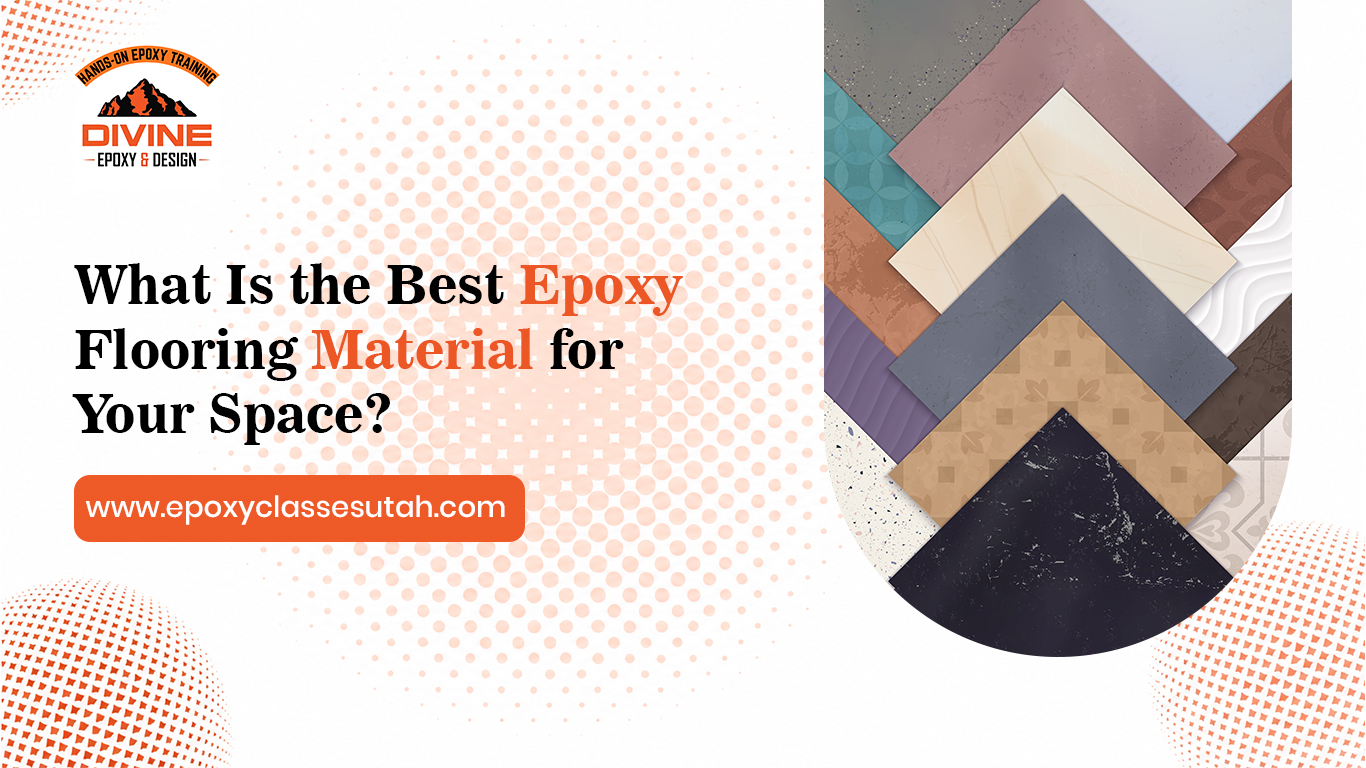
Epoxy floors convert ordinary concrete into high-performance, beautiful surfaces. You can find these floors at residential garages, massive chemical plants, and busy commercial warehouses. However, “the best” material is not a single product. It depends on your specific environment, budget, and traffic levels.
This blog covers the different resins, hardeners, and decorative additives that make up a professional floor system. By the end, you will know exactly which combination of materials fits your project.
Understanding Epoxy Flooring Materials
To choose the best material, you must understand what epoxy actually is. It is not just heavy-duty paint.
What Is Epoxy Flooring Made Of?
Epoxy flooring consists of two main liquid parts: a resin (Part A) and a hardener (Part B). When you mix these two components, a chemical reaction begins. This reaction converts the liquids into a rigid, plastic-like solid. This final material bonds tightly to the surface below, usually concrete
How Epoxy Flooring Systems Work
The strength of the floor comes from a process called cross-linking. During mixing, molecules from the resin and hardener hook together to create a three-dimensional network. This network provides the floor with its famous resistance to chemicals, impacts, and heavy weights. If the mix ratio is even slightly off, the floor may remain sticky or become too brittle.
What Materials Are Used in Epoxy Floors?
A complete floor system uses several different layers and additives to improve durability, appearance, and overall performance.
Epoxy Resin
The resin creates the structural base of the system. There are three primary types used in flooring:
- Bisphenol A (BPA): This is the most common resin. It offers excellent adhesion and strength for standard commercial and residential use.
- Bisphenol F (BPF): These resins have a lower thickness (viscosity). They penetrate deeper into concrete and provide better resistance to strong acids and solvents.
- Novolac Epoxy: This is the heavy-duty choice for extreme environments. It handles high heat (up to 170°C) and concentrated acids that would melt standard epoxy.
Concrete as the Base Material
The resin creates the structural base of the system. There are three primary types used in flooring:
Quartz Aggregates
Quartz flooring combines epoxy resin with ceramic-coated silica sand. This is one of the toughest materials available. It provides a very gritty, slip-resistant surface that performs well under continuous use from forklifts and heavy machinery.
Metallic Pigments
If you want a wow factor, metallic pigments are the best choice. These consist of tiny mica nanoparticles coated with metal oxides. When they are suspended in clear resin, they reflect light and create swirling, marbled patterns that look like natural stone or flowing lava.
Vinyl Flakes
Vinyl flakes, also known as color chips, are widely used in residential garages. These chips are made of PVC and come in thousands of color blends. They add texture, hide dirt, and provide a multi-colored appearance like granite.
Silica Sand
Plain silica sand is commonly used in industrial facilities where safety is more important than aesthetics. It is broadcast into the wet epoxy to create a non-skid finish.
What Is the Best Material for Epoxy Floors?
The best epoxy flooring material depends on factors such as the environment, expected traffic levels, and performance requirements of the space.
Best Material for Residential Epoxy Floors
For indoor living spaces or basements, a vinyl flake epoxy system is a popular choice because it is durable, easy to maintain, and provides an attractive finish. Vinyl flakes also help conceal minor imperfections in the concrete slab while giving the floor a clean, professional appearance.
Best Material for Garage Floors
A garage floor must handle “hot tire pickup,” where heat from tires pulls the coating off the ground. The best system for a garage is a 100% solids epoxy base topped with a polyaspartic topcoat. Polyaspartic materials are flexible and highly resistant to tire heat and UV rays.
Best Material for Commercial Buildings
For retail stores or office lobbies, metallic epoxy or decorative flakes are the top choices. These materials balance beauty with durability. For high-traffic areas like commercial kitchens, quartz-filled epoxy is the best material due to its extreme slip resistance.
Best Material for Industrial Facilities
In warehouses or manufacturing plants, 100% solids epoxy is a preferred choice. If the facility handles harsh chemicals, a Novolac epoxy is required to prevent the floor from dissolving.
Comparing Different Epoxy Flooring Materials
The following comparison highlights the key characteristics of popular epoxy flooring materials to help you determine which option is best for your project.
| Material | Durability | Appearance | Slip Resistance | Best For |
|---|---|---|---|---|
| Vinyl Flakes | High | Multi-color “Chip” | Good | Residential Garages |
| Quartz Granules | Superior | Uniform/Gritty | Excellent | Commercial Kitchens |
| Metallic Pigments | Moderate | Marbled/Glossy | Variable | Showrooms & Lobbies |
| 100% Solids | Superior | Solid Color/Gloss | Good | Industrial Warehouses |
| Water-Based | Moderate | Matte/Thin | Average | Residential Basements |

Which Epoxy Flooring Material Lasts the Longest?
If you prioritize long-term durability, consider these high-performance epoxy materials known for their exceptional durability.
100% Solids Epoxy
These coatings stay thick as they cure because no liquids evaporate. They can last 10 years or more under constant use. This is the most durable resin base for any floor.
Quartz-Filled Epoxy
Because quartz is a hard mineral, it makes the epoxy nearly indestructible. This material resists the deep scratches and gouges that can damage standard resin floors.
Polyaspartic Topcoats
A polyaspartic topcoat is the best protection for your investment. It is harder and more scratch-resistant than epoxy, and it helps protect the floor from sunlight.
Multi-Layer Epoxy Systems
The longest-lasting floors use a “synergy” of materials. This involves a primer to bond to the concrete, a 100% solids base coat for strength, a decorative layer of flakes or quartz, and a final protective topcoat.
Common Mistakes When Selecting Epoxy Floor Materials
Be aware of these common mistakes when selecting epoxy floor materials to help maintain a longer-lasting floor.
- Many cheap hardware store kits are low-quality water-based epoxies that peel quickly.
- Accurate mixing is essential for a durable epoxy floor. You must use a digital scale or calibrated cups to ensure the ratio is perfect.
- Epoxy alone will eventually scratch and fade in the sun. Always add a UV-resistant topcoat.
- Applying epoxy over dirty or smooth concrete is the number one cause of floor failure.
Final Thoughts
The best material for epoxy floors depends on your specific environment and performance needs. Properly prepared concrete is the essential foundation for any successful installation. For maximum durability and thickness, 100% solids epoxy is the superior resin choice. Decorative and functional additives should be selected based on the floor’s use: quartz granules offer the best slip resistance for commercial settings, vinyl flakes are ideal for hiding imperfections in residential garages, and metallic pigments provide a high-end aesthetic.
Finally, finishing with a polyaspartic or polyurethane topcoat ensures long-term UV stability and scratch resistance.
Frequently Asked Questions
What is the strongest material used in epoxy flooring?
Novolac epoxy is best for resisting heat and chemicals, while 100% solids epoxy with quartz is best for handling heavy weight and impacts.
Is quartz epoxy better than flake epoxy?
Quartz is commonly used in commercial spaces because it is durable and slip-resistant, while flake epoxy is better for home garages because it is affordable and customizable.
What is the best epoxy material for garages?
A full broadcast vinyl flake system with a polyaspartic topcoat is the best choice. It resists hot tire pickup and looks professional for years.
Which epoxy flooring system is most slip-resistant?
Quartz systems offer the highest slip resistance due to their naturally gritty texture.
How long do epoxy floors last?
With proper preparation and high-quality materials (100% solids), an epoxy floor can last 10 to 20 years.
Can epoxy flooring be installed over existing concrete?
Yes, as long as the concrete is structurally sound and properly ground or blasted to create a rough profile.
No comment